Managing Expectations – “Expectucation”

One aspect of patient counselling I never really considered before entering medicine was the process of evaluating and meeting (or not meeting) patient expectations.  There’s a popular acronym that gets taught in med school: “FIFE“.  This stands for Feelings, Ideas, Function, and Expectation.  It means you are supposed to ask patients about their emotions surrounding a medical problem, what they know about it already, how is it affecting their functioning, and what their expectation is from the medical encounter.  Most people use FIFE when they run out of things to say as a medical student taking a history.  Then they awkwardly go through that acronym in a robotic manner and patients look at them funny.  I know because I’ve been there.  Once you’re more seasoned however you can integrate these concepts into your history-taking and it becomes much more fluid and even unconscious – like the rest of medical practice.

Currently on an off-service emergency medicine rotation I am seeing the importance of managing expectations.  Occasionally we get “frequent-fliers” coming to the ER.  Patients with vague complaints and a long list of prior ER visits and investigations under their belt.  I really feel for some of these patients.  Some of them are just flat out crazy.  But regardless, when someone comes in and “demands” a MRI you need to be able to mitigate their, sometimes unrealistic, expectations.  Sometimes this can be awkward…

Another important area where this is applied is surgical counselling.  There’s no better way to wind up with unhappy patients, and subsequently lawsuits, by operating on someone with unrealistic expectations.  During surgical consultation it is important to outline how the proposed procedure will benefit the patient, but also its limitations.  Truly, it’s all part of informed consent.

As doctors we want to make people happy.  We want people to feel like they’ve had the best possible care.  Part of this hinges on their expectations, and unfortunately some peoples’ expectations are unrealistic.  It’s important to empathize with patients and understand their position, but sometimes you need to lay down the law.  If you’re dealing with a reasonable person, thoughtful discussion about pros and cons as well as expectations will usually lead to patient (and provider) satisfaction!

Sep. 2, 2014 Easy night call and a false alarm

I’ve complained/ranted a lot about call on this blog; I guess that’s because call has a pretty major influence on your residency experience, at least when you’re on a busy service (which is most).  Yesterday though I had a fantastic call shift.  It was a stat holiday so I got paid double, which probably works out to $5/hr but hey that’s still double.  The best part is that other than rounding in the morning I really only had a couple calls for the entire day/night, which meant I spent most of it in my call room watching Netflix.  Win!  Cosmos on Netflix is an amazing show.

I did have one minor panic attack though.  At 9pm I decided enough with Netflix and that I would actually go home to sleep.  Before doing so I decided to check in on the ward to see if there were any nursing questions.  This practice is sometimes called “tuck-in rounds” and is highly recommended before you go home to avoid more pages.  As I was walking to the ward I heard the overhead hospital PA system announcing “Code Blue, Tower x.”  Unfortunately the tower number she announced also happened to be where the majority of the vascular surgery patients reside.  My running pace immediately picked up to a trot and I pulled out my list to see which of our patients could possible have coded.  There were a few.

When I got to the elevators I was joined by two ICU residents who were also heading to the code.  They saw that I was going to the same floor and asked if I knew the patient who had coded.  I didn’t, but I hoped it wasn’t one of mine…  The senior ICU resident asked me to help with chest compressions if necessary and of course I agreed.  Once we arrived at the room I was immediately relieved to see it wasn’t a vascular patient, but rather a hepato-biliary patient.  Big surprise there.  I was also quite relieved to see that an entire team of ICU residents, ICU nurses, ward nurses, and other miscellaneous members of the code team had assembled.  This meant that I didn’t have to stick around and help, because to be honest I would be more in the way than anything.  Win!

After checking in on our team’s patients I was fortunate enough to sleep the rest of the night at home.  When I came back the next morning I asked a nurse what happened to the coding patient, and he made it.  Everybody wins!

“Medcest” – dating and relationships in medicine

doctor-romanceJust imagine your first day of medical school.  You’re packed into some lecture hall listening to various speakers congratulating you, but you are distracted as you gaze around the room.  You see 100-200 other young, intelligent, and passionate new medical students and can’t help but think…some of them are hot!

I remember in my first week of medical school we were given a wellness lecture where they actually told us that the majority of students entering med school in outside relationships would break up with their significant others within the first year.  I thought this was ridiculous, and a little bit funny in a weird way, but it turns out they were right.  In my class we had short term relationships, long term relationships, long distance relationships, and even marriages end in the first couple years.  It seems bleak, but in a way it made sense.  Medical school is a transformative process that is demanding, emotionally draining, and frankly difficult for someone to really understand unless they’ve gone through it.

It’s not all bad though.  Some people in my class married their high school sweethearts.  There is hope.  There is also this interesting concept of “medcest.”  Dating people within the class, or within medicine in general.  During med school I did both, so I can give some of my personal opinions.  I ended up meeting an incredible girl in my class during clerkship, and we are still dating today.


Dating outside of medicine

During first and second year I had a couple romantic interests outside of the class, including an actual girlfriend.  I remember thinking then that this was definitely the way to go.  It’s easy to get totally sucked into the medical world and at every social gathering (which is inevitably with your classmates) the conversation always ends up about medicine.  I figured by having a girlfriend outside of the class it would give me some distance and strengthen my connection to the outside world.  This worked to some extent.  I always had interesting stories to bring home and it always blew my significant other away.

When I dated outside of the class it was during the first and second years – the pre-clerkship years.  I can see things being different in clerkship.  Third and fourth year are incredibly interesting but the hours are longer.  All of a sudden you have overnight call shifts, or you’ll go five days in a row without seeing daylight because you get up so early and come home so late.  You’ll come home from a day of standing on your feet in one place for 9 hours in the operating room and you’ll just want to have dinner and go to bed.  If you don’t have a supportive significant other their patience can wear thin.  Eventually the glamour of dating a doctor-to-be may not seem worth it anymore.

Like I mentioned before, some people were successful in maintaining relationships with significant others outside of medicine.  Really, it just requires understanding on both sides and a very supportive significant other.  If you do have someone supportive it can be a great way to maintain balance in your life and keep more interests outside of medicine.


Pulling a Grey’s Anatomy

Being constantly surrounded by the same people day in and day out and having a pretty much endless supply of topics to discuss and experiences to share makes it easy to meet people in your med school class.  Not only can you tell someone a story that they will really understand, but you can share inside jokes and seek advice and counsel.  Entering the medical profession is a big commitment.  People talk about balance, and yes this can be achieved to some extent, but no matter how you look at it medicine will forever play a dominant role in your life.  If you share this with someone else it can certainly make it a richer experience.

At the beginning of clerkship I started dating a girl in my class.  We are proof that a relationship can develop even in the busiest circumstances, as I was on a general surgery rotation and she internal medicine.  I found it refreshing coming home and getting to talk about my day without translating everything into layman’s terms.  I could confide in her, tell her jokes only another med student would get, and ask advice.  As a bonus we naturally have a lot of shared friends and thus a similar social calendar.  To me it all felt a little bit easier.

Now we are in residency and are busier than we both could ever have imagined.  Having an understanding partner now is absolutely paramount to a successful relationship.  She can be both sympathetic and empathetic because she goes through the same experiences I do.


The verdict

So, should you date someone in medicine or not?  Can you have successful relationships outside of the class?  The answer, like most things in medicine, is “it depends.”  Having a significant other outside your profession can provide you some valuable distance and help you maintain a better balance in your life.  But, they will need to be understanding beyond measure because your lifestyle and personality will change over the four years of med school.  You will grow into a new person and your significant other will have to grow with you.

Dating within medicine provides you with a companion on your journey through medical education and beyond.  You have someone close to confide in, joke with, and even commiserate with on a level not possible with others.  It allows you to combine two major aspects of your life into one.  I am in a wonderful relationship now with another doctor and have no regrets.  But like anything, this all depends on the person.  I just happened to get lucky and find a good one!
Aug. 23, 2014 First laparotomy and overnight ORs

step411041240138I was really looking forward to this past week for a number of reasons.  First, my girlfriend (who lives in a different city now) is here visiting.  We actually “couples matched” during the residency application process but seeing as we are in different cities that did not work out as planned.  More on that in another post.  Secondly, I spent two days in an outpatient surgical clinic which meant I helped a staff with minor procedures instead of running around the ward doing consults.  Finally, since I was on call Thursday I was allowed to leave a little earlier Friday which means long weekend!

Call shift on Thursday was a bit crazy.  We had two ruptured abdominal aortic aneurysms (AAAs) in one night.  I’ve never seen the OR so frantic before.  There must have been 15 people in there: surgeons, anesthesiologist, nurses, x-ray technicians, medical students, etc.  I would call it controlled chaos.  Lots of yelling, but still organized closed loop communication.  The adrenaline was flowing.

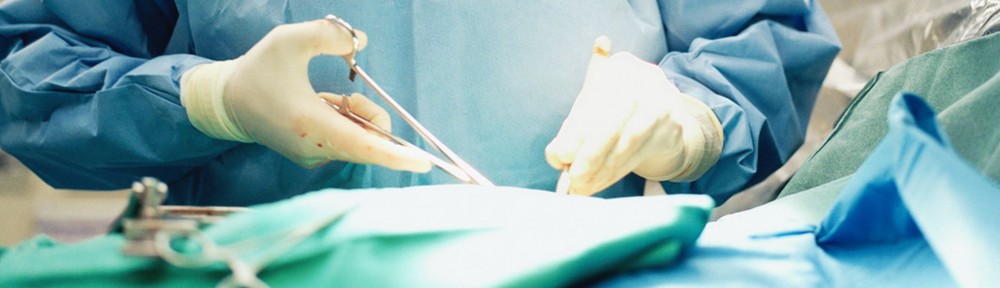
We repaired the first AAA using an endovascular technique, which meant no large incisions.  Unfortunately, the patient was bleeding into his abdomen from the rupture so as the procedure went on his abdomen began to balloon.  We were worried he would develop abdominal compartment syndrome (too much intra-abdominal pressure) so we decided to cut his abdomen open and apply a vacuum dressing.  Essentially he would leave the OR with his abdomen wide open, with a saran wrap-like dressing over top.  Not ideal for the patient, but it was a good experience for me.  The surgeon asked me to come open the abdomen.  I used a scalpel to make a 10 inch midline incision, and then a cautery blade to burn all the bleeders and cut down through all the layers until bowel.  I’ve never been allowed to do the whole thing before.  I can only think of one other occasion where I did the skin.  So, this was a major rush!

We finished the first AAA around 9pm.  I had a couple hours to deal with ward stuff and an hour to sleep.  Then the next AAA came to the hospital and by the time we saw the patient in emerg and got him ready for surgery it was 4am.  We ended up finishing that OR at 9am.  I didn’t get to do as much in the second OR but I really didn’t mind because honestly I was just fighting to stay awake!

All in all, long call shift but I got to do my first laparotomy which definitely made it worth it!


NB:  All of the pictures in this blog are publicly available on Google and have nothing to do with me or the patients I see.  I add them for interest sake.

Aug. 19, 2014 Weekend Call Update

I think I will begin writing updates in the form of journal entries.   When I think about it, this was what I originally intended for this blog.  It’s supposed to be a vehicle for my reflection, but also to allow people to share my experiences as a resident.  When I first started writing this blog it was before residency had started, so posts were mostly in an article format.  That has mostly continued on, but I think I will start adding more journal/diary entry posts as well.  This should also make it easier to add more frequent content!


Last weekend I was on-call.  On vascular surgery, like urology, you do “home call.”  This means that technically you are allowed to go home, but can be called back to the hospital at any time.  The benefit is that you are allowed to go home, and generally you’re not running around the hospital all night.  The downside is sometimes you ARE running around the hospital all night and to make it worse you don’t get a protected “post call day” afterwards.  So, home call can be a major win or colossal fail depending on how busy the call shift is.

I was very fortunate and had a super easy weekend call.  On Saturday morning I met the senior resident to round on our ward patients from 8-10am.  Then I essentially had the rest of the day off and hung out in my apartment until 9pm.  At that point we got called for an intra-op consult for ischemic bowel in a general surgery case.  I came to the hospital and got to operate for 3 hours, then left at midnight.  Sunday morning we rounded again, and then I didn’t get called for anything the rest of the day/night!  Amazing!  Basically I only had to do 6 or 7 hours of real work all weekend and I got to operate.

During the operation on Saturday night I had a neat experience.  There was a big abdominal incision in which the staff and senior resident were working, but there was also a big incision on the leg where we had taken a vein for a graft.  Near the end of the case the staff turned to me and ask me to “finish up with the leg.”  At this point the leg wound was essentially just sitting there with a couple of surgical sponges in it.  So, without anyone really watching over me, I ligated the remaining ends of the vein, cauterized and bleeders, and then closed the subcutaneous fat and then stapled the skin.  It was pretty cool getting to do things on my own with no supervision.  It was also a little scary because I had no one telling me whether or not I was in the right layer when doing the closure.  But to be honest, while it seems like a big deal for me, in reality I was just suturing some fat together and then closing the skin.  Not a super critical task.  It’s definitely a rush though when you’re the one holding the instruments!

Five Essential Skills for Surgical Clerks

Here are some essential skills needed if you want to look like a stud during your surgical clinical elective.  You may not get a lot of opportunities to practice or demonstrate these skills. But, when the time comes, if you are asked to perform one of these skills and you can do it well it will be noticed.  Spoiler alert: instrument tie is not one of them, this is surgery we’re talking about here not emergency medicine!


1. One-handed and two-handed ties.

Learn to one-handed tie using your left hand.  This is the proper way to do it because you won’t have to swap the needle-driver between hands when you are actually suturing, saving you an extra step.  Also remember when you’re practicing to always push down each knot and tighten with your finger, because this is what you would do in real life.  Try to move between throws without dropping and re-grasping the suture.


2. Foley catheter insertion.

I’m obviously a bit biased here being a urology resident, but make sure you can put in a foley without looking like a fumbling idiot.  Remember to have all your supplies ready and open before you put your sterile gloves on.


3. Running subcuticular suture.

This is important because one of the few roles a medical student has in the OR is to close skin, so it is your time to shine! I actually spent quite awhile trying to find a good video explaining how to do this technique.  I came across a lot of Youtube videos demonstrating it and to be honest most of them are crap.  This one is from Duke and is pretty good.  It also shows you on real skin which is good because you need to see the skin layers to do this suture properly, and you don’t get that on a plastic model.  Also for the initial anchoring suture, the best way to do it is with a single inverted sub cuticular stitch, and then cut one end short and leave the other long for your skin closure.


4. Fast, efficient consults.

Practice your consults and make them quick and efficient.  You’re not on an internal medicine elective where the consults are 4 pages long.  Think pertinent positives and negatives only.  You will learn what these are over time, but try not to include a lot of extraneous information.


5. Procedure notes and post-op orders.

Another thing you can do to help out in the OR and will get noticed is to complete the OR note as well as write post-op orders.  OR notes are easy and follow the template:

Pre-op dx, post-op dx, procedure, surgeon(s), estimated blood loss, complications, findings, anaesthetic type, stable to PAR, etc.

Post-op orders vary between senior residents and service, but try to take pictures of someone’s post-op orders so you learn what they like.  Pictures on your phone make great references.


Remember that your role in surgery as a medical student is limited, so you only get a handful of opportunities to demonstrate your skills.  Make sure you practice so that when you do get those opportunities you can really impress!

Getting to Operate

4_6I’m now on a new rotation – Vascular Surgery.  The way the team is setup is a little different than my last rotation.  There are multiple junior residents now and one senior.  The person who is on call for the night also takes the day pager.  The senior goes to the operating room.  That leaves the rest of the junior residents to stick around and help with the occasional consult or……. go to the OR and operate, either as second assist with the staff and senior or as first assist in a separate room!

I have only been first assist a handful of times before, and usually not for the entire case.  It truly is a different experience from being the med student standing off to the side holding a retractor.  It’s also a bit intimidating at first.  You’ve seen a bunch of people operating before and everything looks like it makes sense.  But, when someone hands you instruments and expects you to know what to do before having to tell you – well let’s just say you need to be on your “A” game and always thinking two steps ahead.

Today I spent the entire day at a daycare surgery facility doing vein surgeries.  It was just me and the staff.  We did six cases, all the same.  High ligation and greater saphenous vein stripping.  This is a procedure to fix varicose veins.  You make two incisions, one in the groin and one near the knee.  You dissect the greater saphenous vein at each location, cut it, and then feed a plastic wire through the vein so that it goes in the knee and comes out the groin.  Then you put a plastic cap on the wire and literally rip the entire vein out.

It’s a pretty simple procedure which makes it a good one for a junior resident to learn.  By the second and third case I was getting the hang of it, calling for sutures and instruments, ligating vein branches, and closing incisions.  I have to say that this is the first time in residency so far that I have really felt like I was operating.  And it was awesome!

These past six weeks have been gruelling and I realize that it’s mostly ward work and consults that are a drag.  But, those brief moments I go to the operating room and do what I signed up to do still make me leave work with a big smile on face.

Top 5 Tips for Surgical Electives: What you need to do to succeed.

Here are some useful tips for a successful surgical elective.  These really apply to any medical elective, but I would say even more so to surgery.  Remember that your elective is essentially a job interview – so give 100%.


Top Five Tips for a Successful Surgery Elective


  1. Be an excellent team player.

Surgery is team-based. Teams are small and there is a lot to accomplish each day. This requires efficiency, excellent communication, and a willingness to help out your fellow team members when possible.


  1. Take care of business.

Most surgical specialties value efficiency and the ability to get things done. If someone asks you to do a task make sure you complete it. If you think of something that could help the team, be proactive and do it.


  1. Be a smooth operator.

No one expects you to know how to operate but you can do small things that make you look good in the OR. For example, when someone is tying a suture you can call for scissors and be ready to cut before asked. Try to pay attention during procedures so if asked to do something you are not caught off guard.


  1. Develop your own management plans.

Clinic is great for face time with staff, which makes it a good place to ask for reference letters. Impress the staff by presenting a tentative plan for each patient you see. It doesn’t have to be correct, but they will appreciate your effort.


  1. Be the person you would want to work with.

Residency programs are choosing the people they will be working closely with for the next five years. Think of the kind of person you would want on your team, because that is what programs are doing as well.


Good luck out there!

Fostering efficiency

130506111031-doctor-hospital-pagers-620xaHi everyone.  First, I would like to apologize for not keeping up with more regular updates.  I have to admit that the beginning of residency has been far more strenuous then I could have imagined.  It’s not that residency in general is like that, I feel it might just be my personal experience.  I think my current rotation, current hospital site, and residency program itself are all aligned for maximum workload right now.  I know this because speaking with many of my friends, our experiences have been quite different these past two weeks.  That’s all good though.  I will still try and provide some updates!

As a first year resident on a surgical team your role is different than most would expect.  Beginning your surgical residency you have this expectation that you will be in the OR, first assist, breezing through cases and provided with opportunities at every turn to participate in the procedure.  Sadly, this is not the case.  In reality, it is the senior residents who do the majority of the operating, as they are preparing to embark on their own practices as fully trained surgeons.  It is the junior resident’s role to take care of absolutely everything else so that the senior residents can operate.  This is called “scut work”

When I was a medical student I thought I knew what scut work was.  Basically round on your patients, write a few orders, and maybe see a consult or two during the day.  All the while, you have a resident to bounce ideas off of and to tell you the management plan for each patient.  While this is true to some extent, I’ve discovered that medical students are actually sheltered from quite a lot of the busy-work.  For example, as a medical student my pager probably went off a grand total of 10-20 times ever.  Now I get more than 20 pages a day from nurses, other residents, staff doctors, the emergency department, the regional bed transfer service, etc.  Some pages are about routine questions or updates about patients, others are consult requests or patient transfers.  There have been more than a few occasions where I will be on the hospital phone answering a page, while simultaneously texting my team about an issue, and also having my pager going off again – all at the same time.  I never had this experience as a medical student.

At the end of the day when the team meets for afternoon rounds everyone expects all of the ward work to be done.  Patients that were planned to be discharged should be gone, scans from radiology should be reviewed, bloodwork should be finished, consults seen.  There is so much to do that I don’t even think about operating right now.

Today I had my first chance to be first assist on an endoscopic laser procedure.  We passed a $20 000 camera up a women’s urethra, into ureter, and all the way up into her kidney.  Then we fed a fiber through the scope and used a holmium laser to blast away her kidney stones.  Finally, we used a nitinol basket to collect the fragments and pull them out of the kidney.  Pretty cool stuff.  My job was mostly to use the basket to grab stones, which was definitely fun.  But, during the whole case all I could think about was how many pages would be listed on my pager when I un-scrubbed and all the pending ward work and consults I had to do.

It’s a difficult position, because on one hand you’re there to learn to be a surgeon but on the other hand your team is expecting you to make sure everything is taken care of.  You don’t want to let the team down.  I guess at this point I’m staying positive and acknowledging that it is important to learn how to do scut work as it teaches you how to manage patients, and maybe most importantly, how to be the epitome of efficiency.

Sink or swim – first week of residency

chen_480

Right now it’s 9:30 pm on a Friday and I am sitting in a call room waiting to be paged to go to the OR.  For the past few days I’ve been waking up at 4:30 am to make it to the hospital in time to print off patient lists, set out charts, and get organized before our team rounds at 6:00 am.  I was on call the very first night, and am on call tonight, Saturday, Sunday.  It’s been a busy week.

The first week of residency has hands down been the most terrifying and stressful week in my medical training so far – and probably my life.  A couple months ago I was a medical student who hadn’t done a real clinical rotation since October 2013.  My final year of medical school was filled with easy electives and international electives.  So, I would say I probably knew more as a 3rd year medical student than I do now.  But, on July 1st I walked into the hospital as a “doctor” and it was an interesting experience to say the least.

Now each time I walk onto the ward nurses will approach me with questions about different patients.  “Can Mr. X go home?”, “Is it ok to pull Mrs. Y’s NG tube?,” “What is the plan for Mr. Z’s nephrostomy tubes?”  I don’t know.  I have no idea.  Even if I do have an idea I don’t know for sure, and obviously don’t feel comfortable sending someone home, or taking someone’s surgical drain out unless I am 100% sure.

What makes all of this tricky is that I am essentially doing this with absolutely no training.  In medical school we learn about the pathogenesis of disease, epidemiology, and theory.  We don’t learn how many days post-op a catheter must stay in.

I will say though that this week I have worked the hardest I have ever worked.  Basically out of sheer terror that I will a) kill someone, b) pester my senior residents and staff, or c) let them team down in some way.  While obviously this week hasn’t been a pleasant experience, I feel that I am learning at a rate totally unprecedented for myself.  Maybe that’s the point of throwing us in the deep end.  Sink or swim.